Up and down and up and down

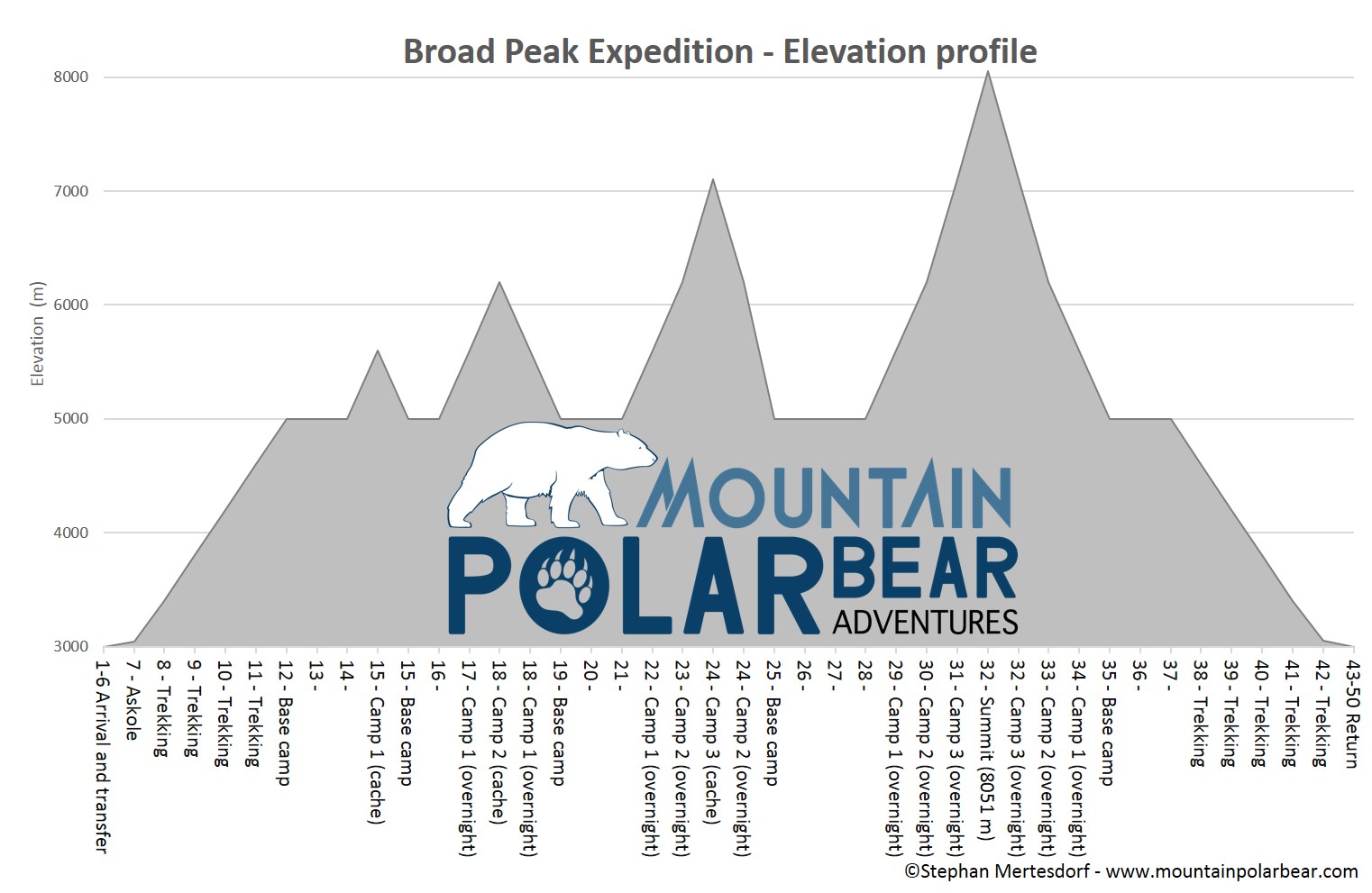
Many people wonder why climbing a big mountain takes such a long time. Well, firstly, many high mountains are in remote areas which are difficult to reach by car, by plane or other means of transport. In our case we use the first six days of our tour to get to our starting point Askole in North Pakistan.

Secondly, the trek into base camp can take some time – in our case another six days. This trek also helps the body to slowly acclimatise to higher altitudes. It produces more red blood cells so that the blood can transport oxygen better and compensate for the lower air pressure in higher altitudes. This is important in order to avoid high altitude sickness.

Finally, the climbing of the mountain itself takes a long time. As a rule of thumb, one should only move 300 metres higher per day so that the body can adapt. In practice, this means that we need carry days and rest days before we can move further up the mountain. On a carry day, we climb up to the next camp, leave some equipment, food or gas there, and return down to our last camp to sleep there. This is called the “climb high, sleep low” principle, which helps your body to acclimatize to greater altitudes. Rest days make sure that your body can recreate after a long hike or climb, possibly with heavy loads. They also serve as buffer for bad weather, so in reality rest days are often not planned, but occur when bad weather stops us from continuing our ascent.

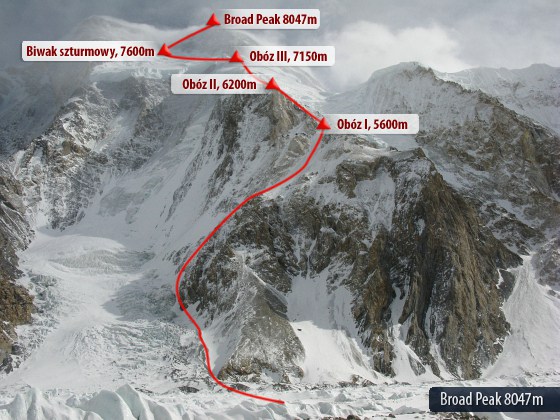
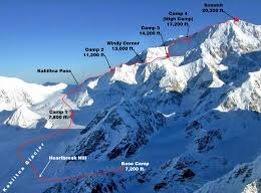
In the picture below, I have made a draft what our expedition could look like. This schedule will be adapted on our way, but it shows as an example how often you actually climb up and down before you finally have the chance to reach the summit.

Stay tuned for further updates on mountainpolarbear.com! Departure in t minus 9 days.
Change of plans – new destination: Broad Peak

Some time ago, I wrote in my blog that I would try to climb Gasherbrum 2 this year – my first peak over 8000 metres. After some back and forth, we finally changed the mountain we are going to climb. Now it’s going to be Broad Peak. Broad Peak is the 12th highest mountain on earth at 8051 metres. It is also located in the Karakorum mountain range, right between Gasherbrum 2 and K2 in Northern Pakistan at the border to China.

I’m climbing with Mountain Professionals again. The team consists of two Norwegians, myself and our guides: expedition leader Ryan Waters from the US and lead mountain guide Tomas Ceppi from Argentina. In addition we will have local staff who assist us on our expedition.

I will leave to Pakistan on the 10th of June, and the expedition will take seven weeks in total – roughly one week to finalise some details, get climbing permits and drive from Islamabad to North Pakistan where we will start our trek. The hike into base camp, which is located at an altitude of approximately 5000 metres, takes six days. From there we have approximately four weeks to try to climb the mountain, and finally another week to hike out and get back to Islamabad.

More updates coming here soon.

Broad Peak route

New logo, new facebook page, new Instagram account

Today, I’d like to proudly present an upgraded social media profile of Mountain Polar Bear Adventures. 

First of all, I’ve got a new logo – designed by my gifted colleague Turid. We’ve been working on this for a while, and I’m extremely happy with the result. Hope you like it, too.

Secondly, I’ve created a facebook page for all Mountain Polar Bear activities. 

And finally, there is a new Instagram account where I will post expedition, travel, training or outdoor photos. 
I’ve also got a new expedition planned for the summer. News coming up on these channels soon, so feel free to follow! :-) 


Aconcagua recap

After about two weeks in the Andean mountains we are back in Mendoza, Argentina, where we started our expedition to Aconcagua, the highest peak in South America.

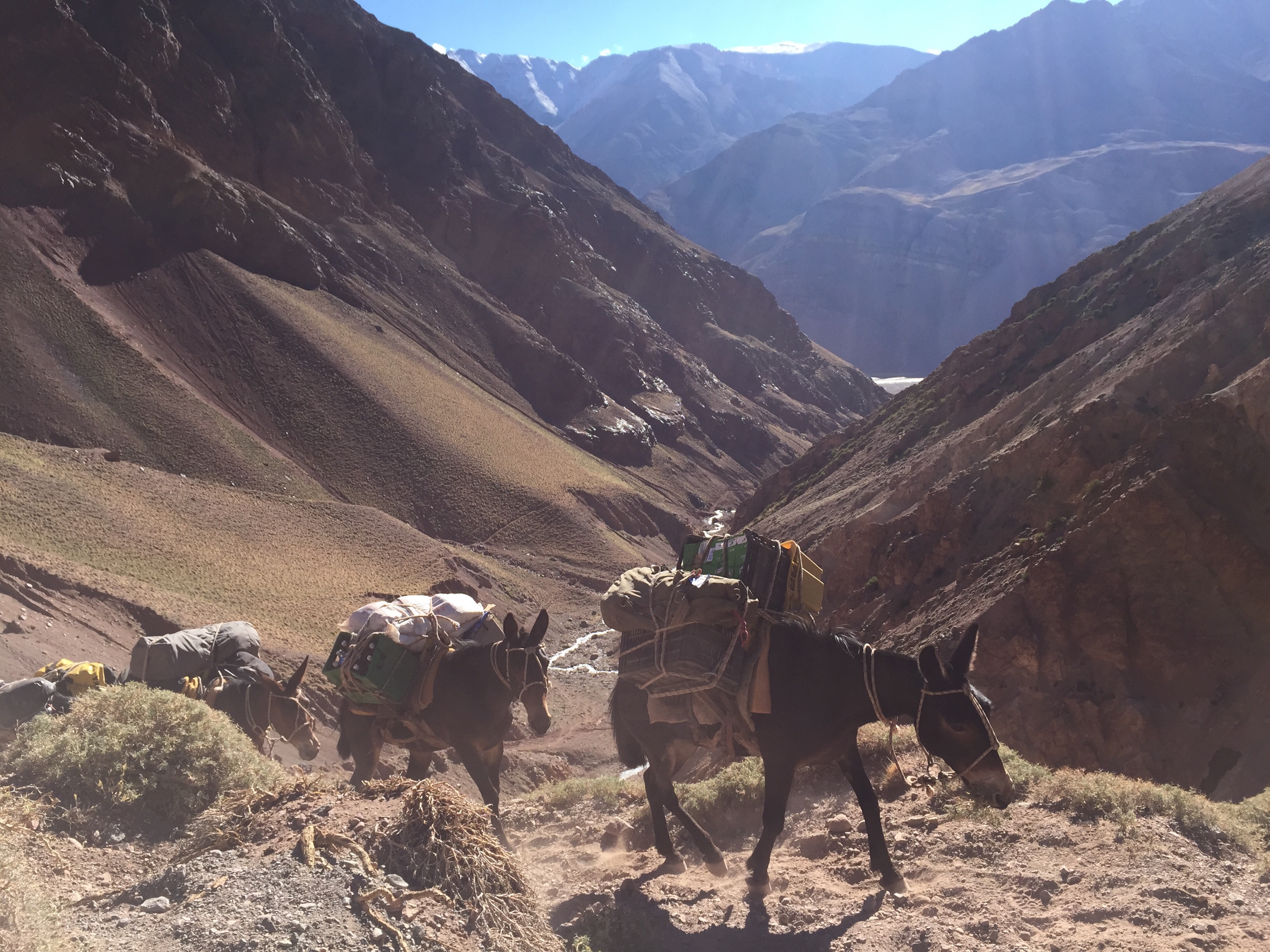
We started our trip with a three days’ hike up to the Plaza Argentina base camp at 4200 meters. This was the easiest part for us because mules carried most of our baggage. We even had one river crossing on the back of mules which was fun. Above base camp, there were three more camps before we could try to reach the summit. At camp 2 (5400 m) we were stuck for four nights because of a storm that brought quite a bit of snow, before we could move on to camp 3 at 5900 m.

At 5 AM Monday morning we left the camp and started the ascent to the summit, wearing our headlamps in a cold night. The way to the summit was pretty long and tough. The snow was knee-deep, and although our guide Chhering did a fabulous job breaking the trail for us, I was very exhausted the further up we came. At 2 PM we finally reached the summit and were rewarded with a stunning 360 degrees view and hardly any clouds.

The way back down to our camp took us three and a half hours. The next day we descended to base camp Plaza de Mulas on the other side of the mountain and were lucky to get a helicopter flight out to the trailhead instead of hiking out the next day.

Now we are enjoying the Argentinian summer and cuisine in Mendoza. I stay here until tomorrow, then I’ll spend a couple of days in Buenos Aires before I return to Norway on Saturday.

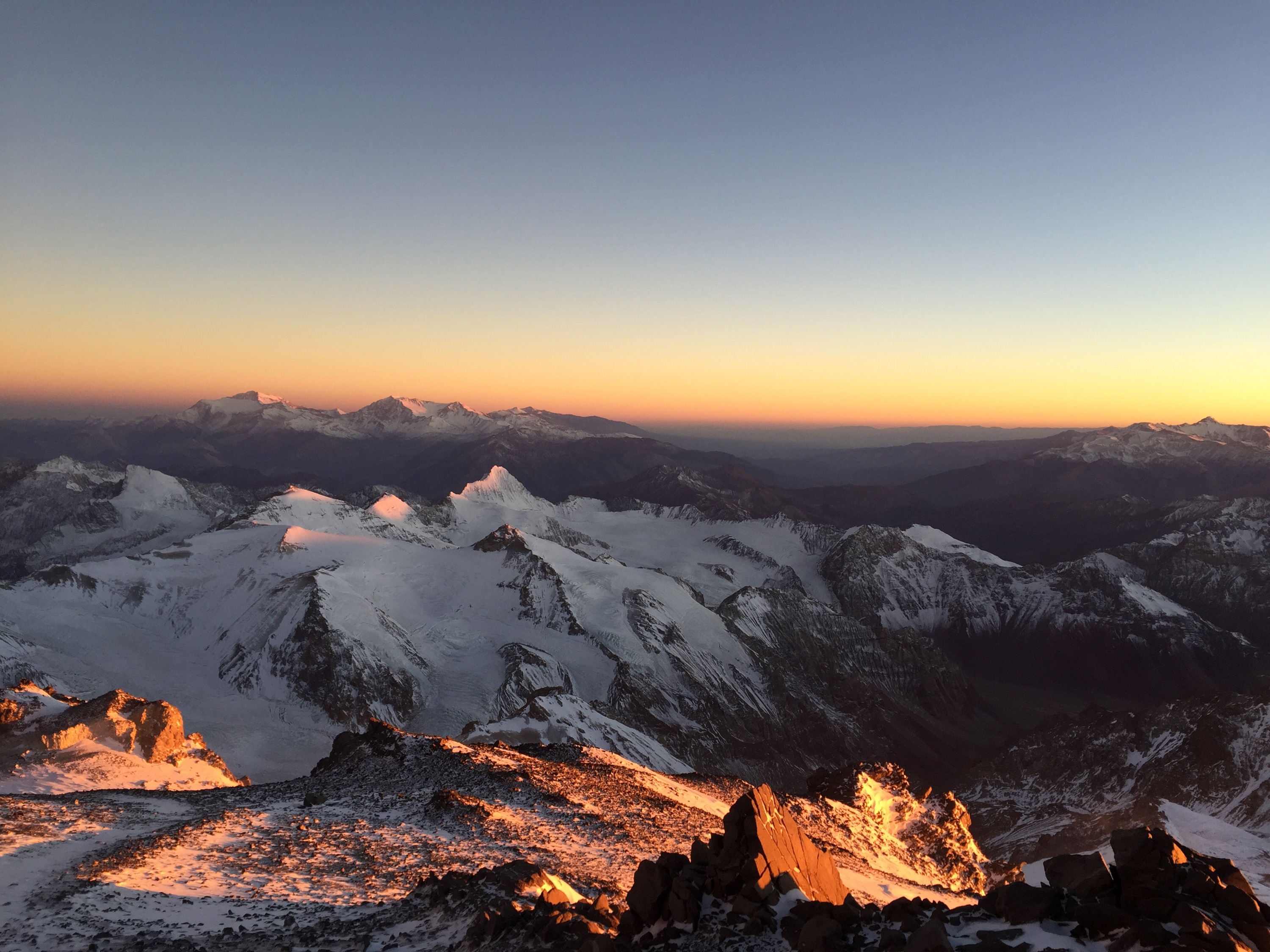
Mountain panorama on summit day right after sunriseMules – our trusted partners on the way to base camp
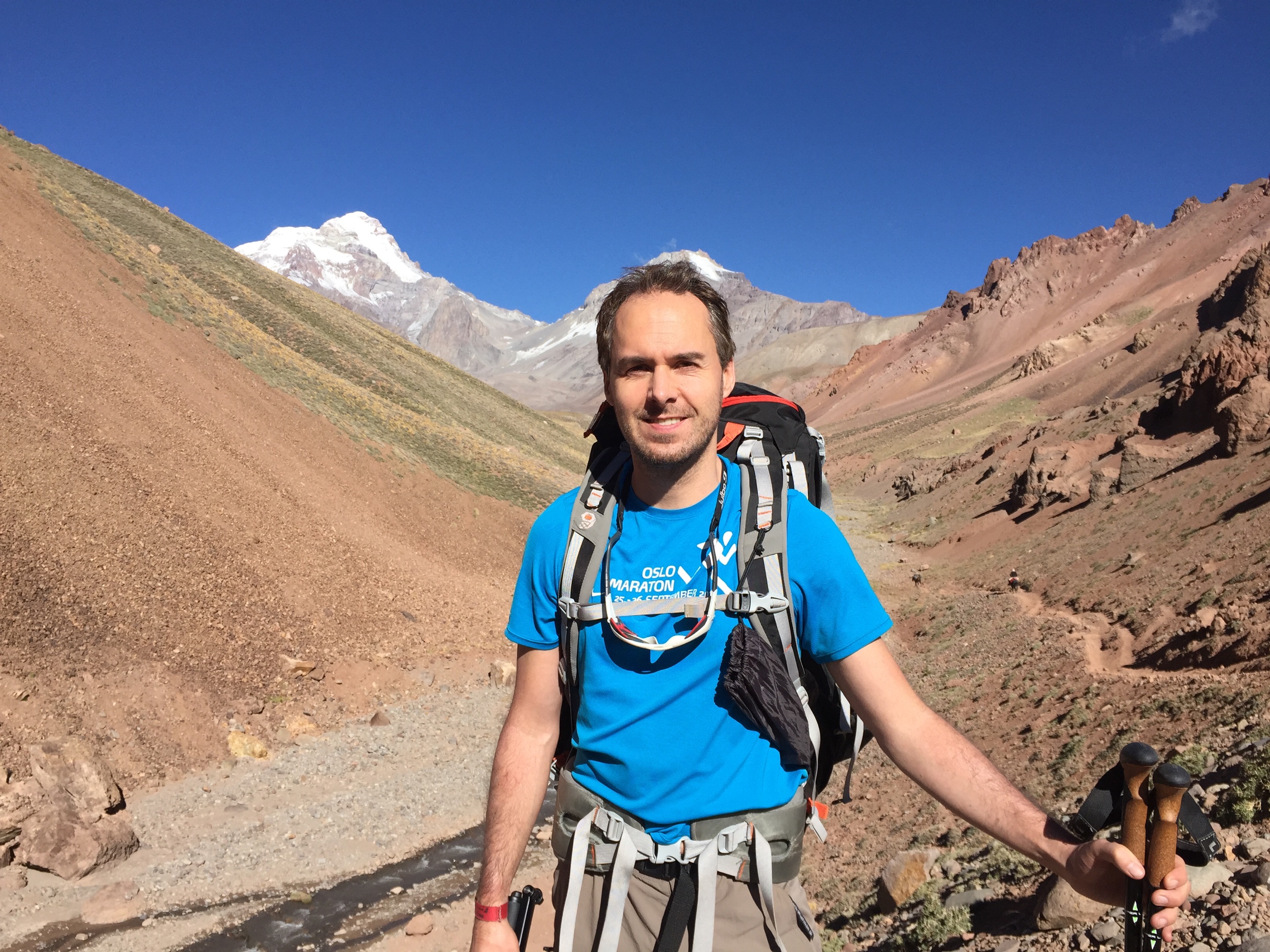
Day 3 on the way to base camp – Aconcagua in the background
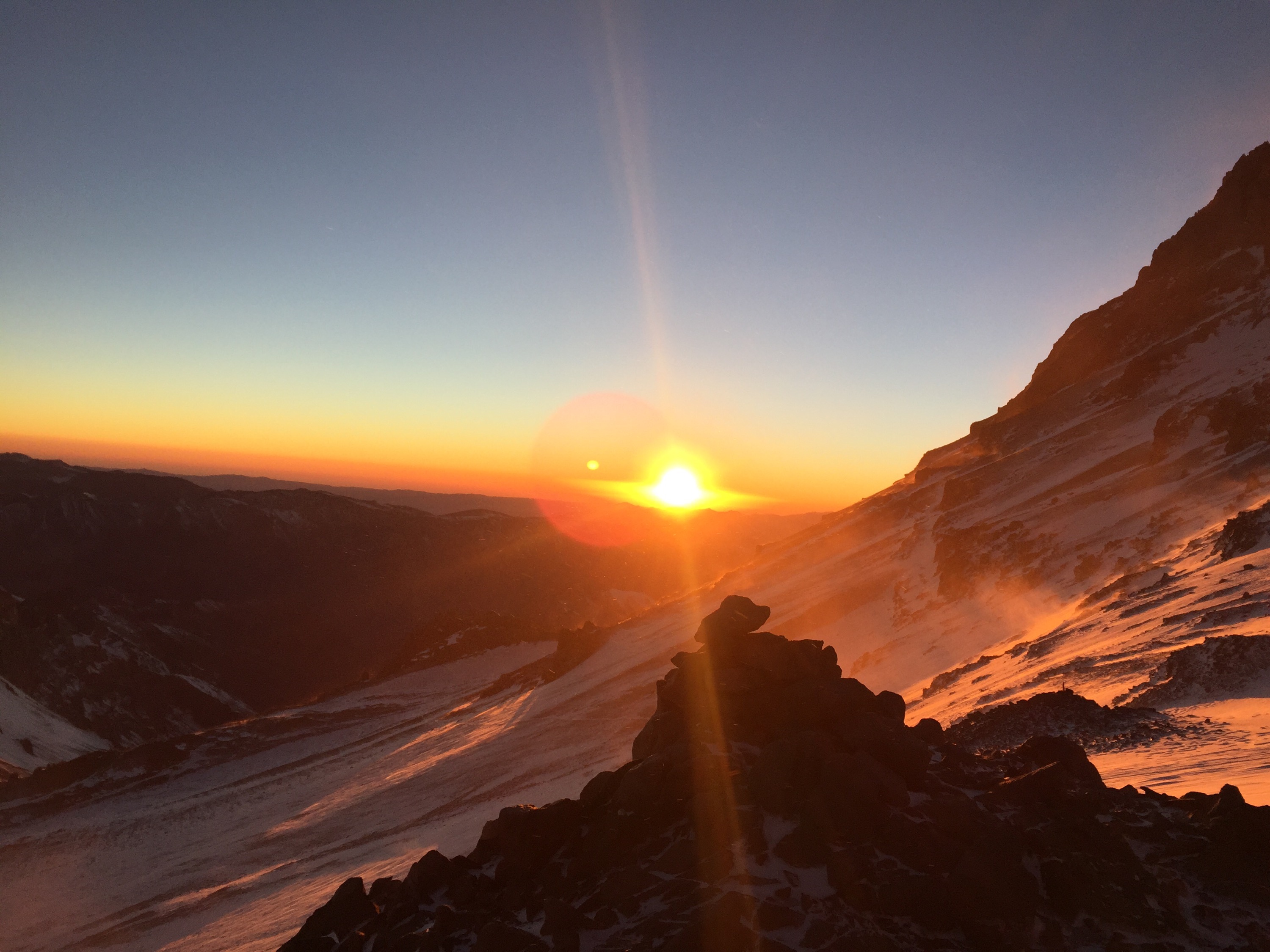
Sunrise on summit dayView from camp 2 after the storm

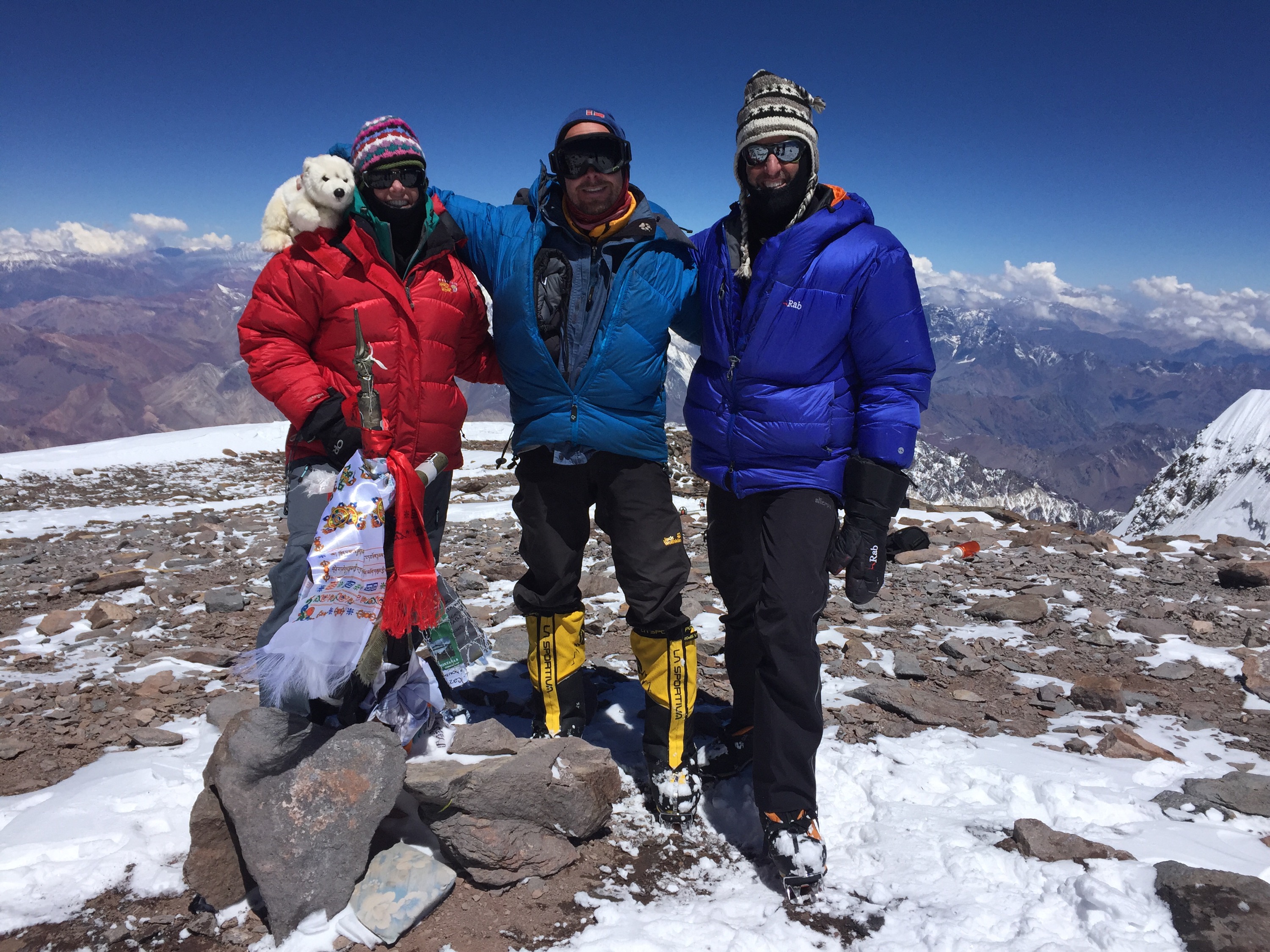
Summited (from left to right): Mr. Nansen, Jodi, Stephan and Richard
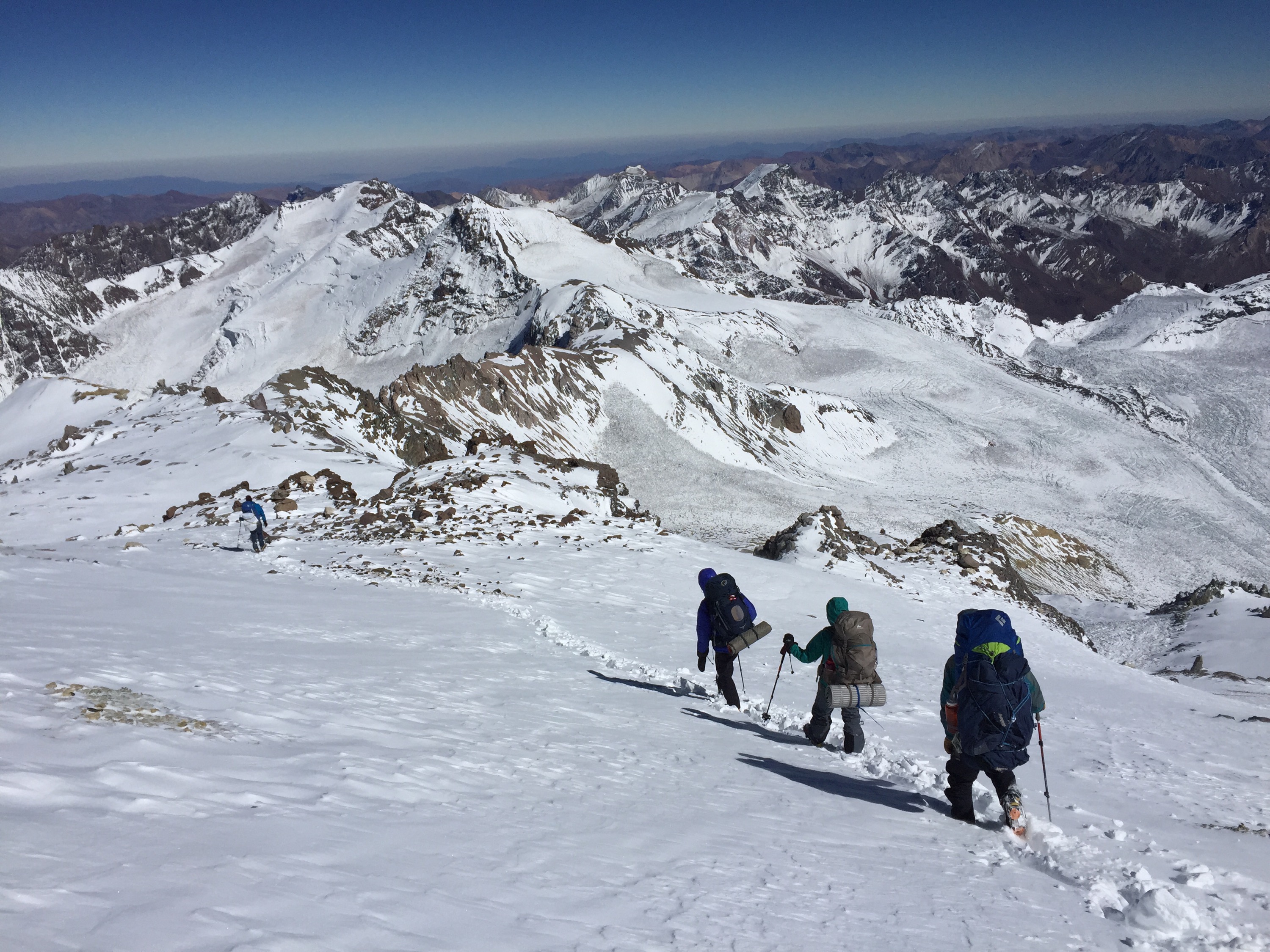
Descent from high camp to base camp

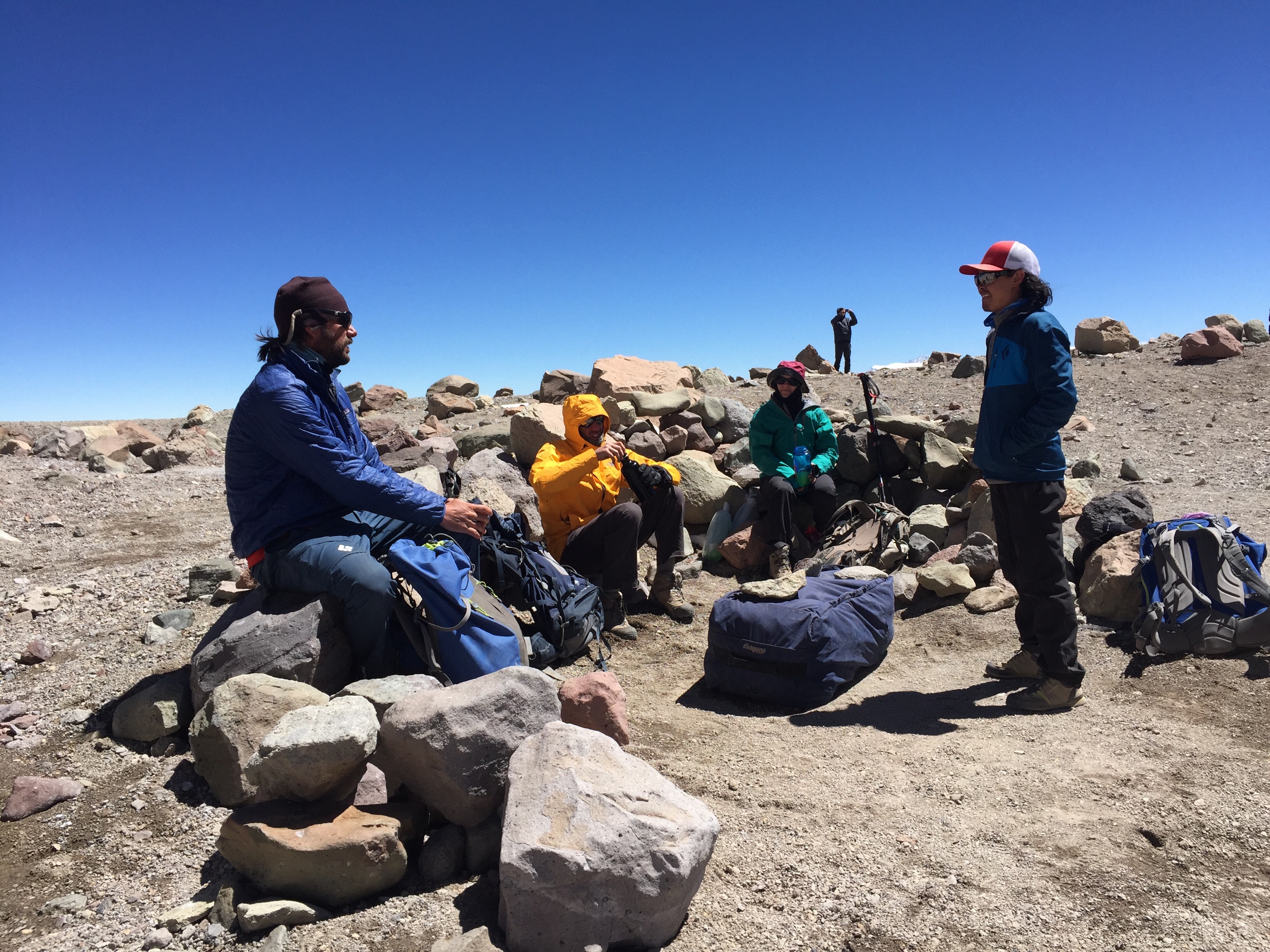
Short break with guides Ryan (left) and Chhering (right)
¡Vamos a Argentina, señor Nansen!

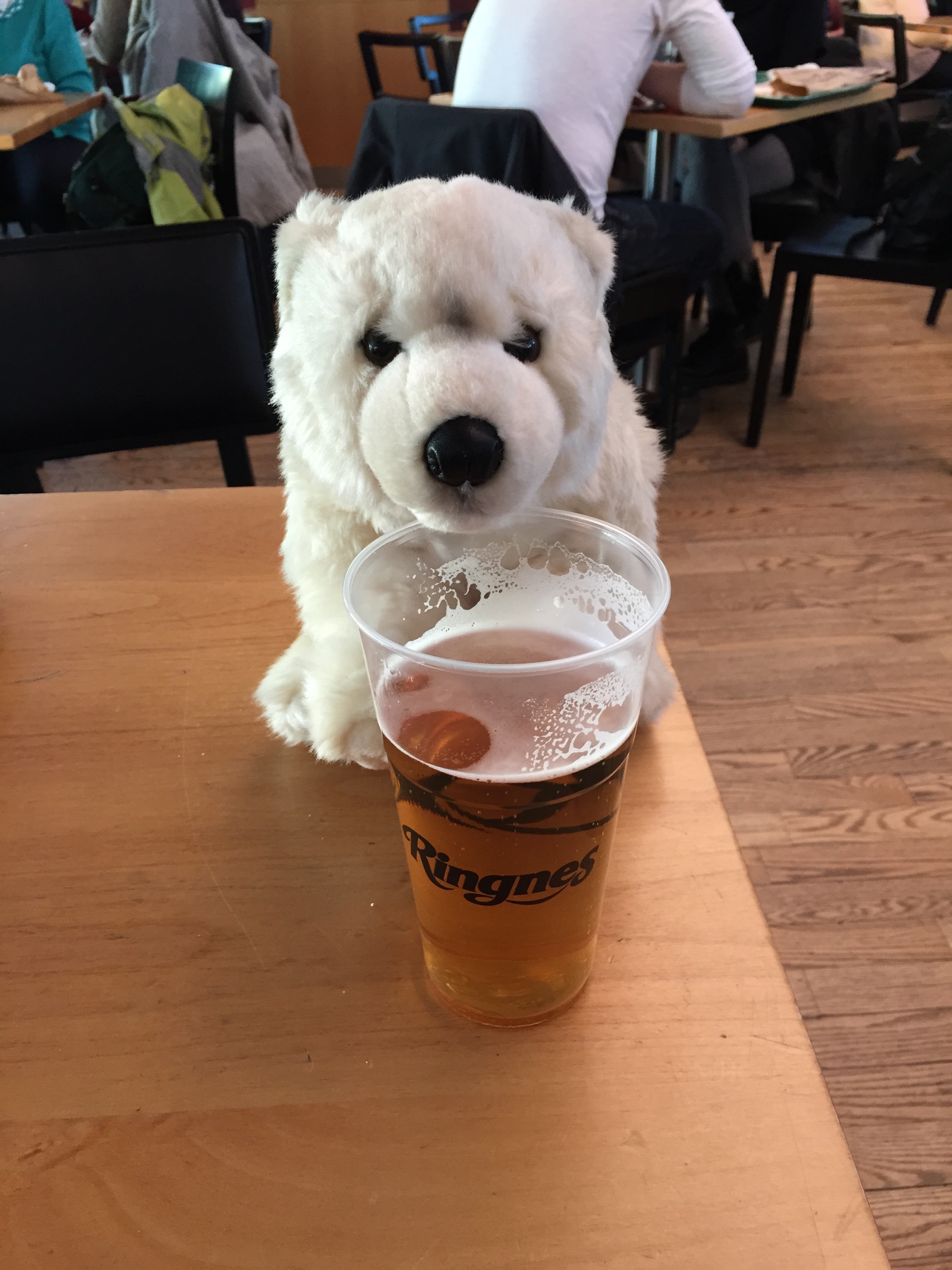
Here we go again! The only mountaineering polar bear Mr. Nansen and I are heading off to our next adventure. This time we’re going to South America, more precisely to Argentina where we are going to make an attempt to climb Aconcagua. Aconcagua (6961 m) is the highest mountain in South America, the highest mountain in the Western and Southern Hemisphere, and the highest mountain outside the Himalaya. We’ll first go to Mendoza where we’ll meet our guide Ryan Waters and the rest of the team, and then we’ll start our expedition on Monday. Hopefully after about two and a half weeks, we will be back in Mendoza and celebrate with Argentinian steaks and red wine. I’ll keep you posted. In the meantime, check also www.mtnprofessionals.com/news for blog updates from the mountain.

(null)

This year’s summer holiday goes to: Mallorca! Just kidding…

Here is a short pre-expedition post from Reykjavik. I have packed my wool underwear, down jacket and down pants, and I’m ready for this year’s adventure: We are going to climb Denali (aka Mount McKinley), North America’s highest mountain at 6168 meters. We, that is a team of two Norwegians, one American, one Englishman and myself plus Mr. Nansen together with three American guides. I know two people on this team from before: Marius who was a part of the Greenland team last year and our guide Ryan with whom I climbed Kilimanjaro two years ago.

My plan for the next days is arriving in Anchorage late local time tonight, staying there for one night, watching Germany win against Ghana tomorrow and then taking a shuttle bus to a small place called Talkeetna. There we will have a mountain skills workshop on Sunday and start our expedition on Monday.

The expedition follows the West Buttress route which is the most common route on Denali. We are going to fly in to Kahiltna base camp with a small airplane which can land directly on the glacier. The base camp is at 2200 m altitude, and we’ll have a total of three weeks for our expedition which will hopefully take us all the way to the summit and back.

That means three weeks of winter camping which I am looking forward to a lot, although Denali is notorious for its bad weather (which means mostly storms and extremely low temperatures). Then again, I am quite confident that the weather can’t be much worse than on our trip across Greenland last year. Otherwise we follow Anne’s word of wisdom: “Either it goes well, or it goes over.”

Note on the name of the mountain: It got its McKinley name as political support for Republican presidential candidate William McKinley from Ohio in 1896. Today in Alaska and among mountaineers it is more common to use the traditional Athabaskan (Native American) name Denali which translates into “the High One.”

I may drop another note here before we leave on Sunday or Monday. After that you can follow our expedition on Ryan’s website http://www.ryanwaters.net/dispatches.html (see the dispatches section).

20140620-161920-58760994.jpg

Departure day

After two intense days of preparation, we are almost ready to leave Kangerlussuaq and start our 26 days’ trip towards Isortoq at the east coast. 26 breakfasts, 26 lunches and 26 dinners are packed in day portions now. My personal equipment is packed on sled no. 1. The shared equipment will be packed on sled no. 2.

In a few hours we will enjoy a musk ox burger at the airport, and that will be our last meal which is not dry frozen. After that our restaurant is called Real Turmat.

Tonight we will first be transported by bus to the glacier and then go for an hour or so where we will establish our first camp. Tomorrow will be our first long day with 12 times 30 minutes.

When we leave civilisation tonight we won’t be able to use our cell phones anymore. So my next update will hopefully be from the east coast on May 27th.

20130501-123313.jpg

Greenland, here we come! One week until departure

Almost exactly 125 years ago, in August 1888, Fridtjof Nansen and his men left on their pioneer expedition trying to become the first ones to cross the Greenlandic inland ice. Their motto was literally “West coast or death” because they knew that nobody would come and rescue them if they didn’t reach the West coast. They started from Umivik on the East Coast and reached the Ameralik fjord on the West Coast 40 days later.

Now it’s only one week left until we leave the Norwegian spring to start our four weeks’ adventure across the Greenlandic inland ice. Us, that is a group of fourteen people: Eleven of which are born with skis on their feet (read: Norwegians), plus one Dane, one Swiss and one German. Three guides and eleven rookies. Six ladies and eight gentlemen. And one polar bear of course – my fluffy friend Mr Nansen is joining the trip as well.

Since our first training meeting in September, we have been preparing for the expedition. The most essential part of the training was pulling old car tires in the Norwegian woods – the closest you get to pulling a sled. Fortunately, we had a long and cold winter in Oslo with plenty of opportunities to go skiing as well.

Another part of the preparation for myself was eating as much and as rich in calories as possible. That includes chocolate, potato chips, popcorn (with lots of butter), some extra butter/oil/cream in every meal, Coke and Solo and so on. The idea is that some extra fat (or should I call it blubber?) both protects you from the Arctic cold and provides an energy reserve on exhausting days which is important since it is almost impossible on the trip to feed the body as many calories as you burn during the day.

Every one of us will have to pull two sleds over Greenland, and we will have everything we need on the expedition with us (food, fuel, and personal equipment). In adventurer terminology you call this kind of expedition “unassisted” (no external supplies or depots) and “unsupported” (using only muscle power – no kites etc.).

Our route goes from West to East. On Tuesday next week we will board a plane from Copenhagen to Kangerlussuaq, and on Wednesday we will start our trip from Kangerlussuaq. We will be driven to the edge of the glacier from where we will start to ascend the ice cap. The first few days have the most difficult terrain. After a while the landscape flattens out but we will still gain altitude every day until we reach the highest point at approximately 2500 meters. From there we continue towards the East coast, and after 26 days and approximately 600 kilometers on skis we will hopefully reach the small settlement of Isortoq.

This time I have no chance to update my own blog. We only have one satellite phone, but you can follow us on facebook under “Grønland 2013”.

http://www.facebook.com/#!/Gronland2013?fref=ts

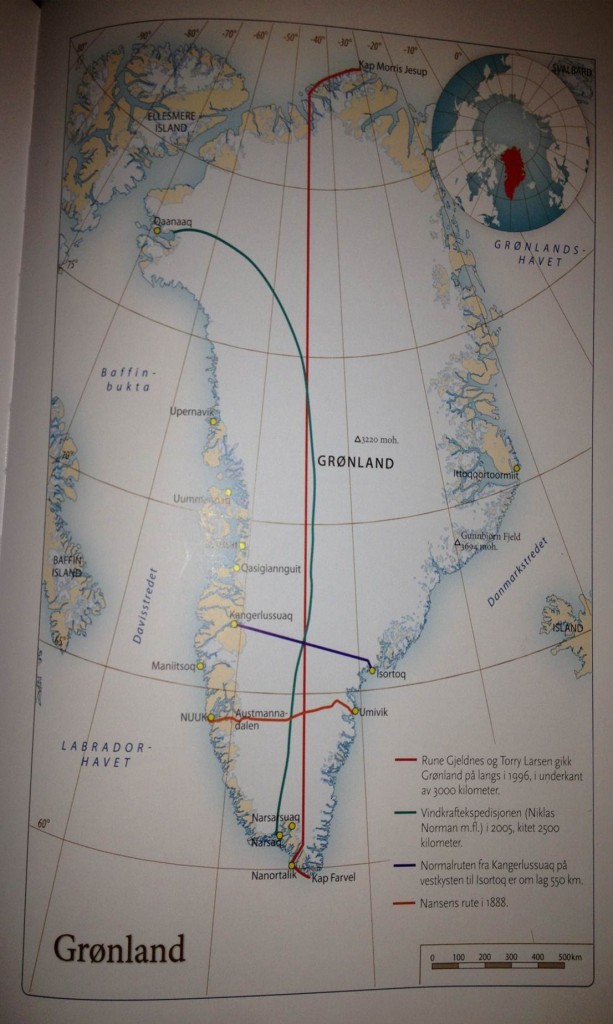
Different routes over the inland ice – ours is the blue one from Kangerlussuaq to Isortoq

Elbrus day 8-9: Hot summit day

We got up at 1.30 AM and had a little snack for breakfast before we started our summit attempt at 3 AM. The weather was perfect: a starlit sky, temperatures just below zero and practically no wind.

We started at the bottom of Pasthukov Rocks at 4550 meters and had to begin on a rather steep slope. The snow was very firm though and easy to walk on.

Right before we reached the saddle between the West and East peak at 5300 meters we came into the sun and we soon had to take off several layers of clothes. The ascent from the saddle to the West plateau at 5600 meters was the toughest part. From there it was only an easy, almost flat walk, and at 11 AM we were standing at the top of Elbrus at 5642 meters and could enjoy the view for quite a while since it was warm and no wind at all.

The descent back to our camp at 4100 meters was quite a challenge because it was hot, very intensive sunlight, and we were running out of water. At 2 PM we were very happy to be back in our camp and could enjoy some cold water and juice.

After one more night up on the mountain, we are now back at our hotel in Terskol and enjoy the privileges of civilisation like a decent toilet and a warm shower. Today we will go for an easy hike in Terskol valley. Tomorrow we will fly back to Moscow before I return to Oslo on Wednesday.

20120723-094847.jpg
– Tommy, Sasha, Derry, John, Mr. Nansen, Róisín and myself

Elbrus day 3: Another hot day in the Baksan valley

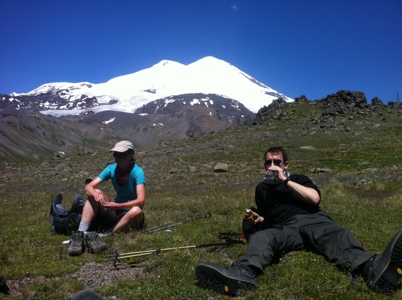
Today was another sunny and very warm day in Terskol. We walked up to Mt. Terskol today to an observatory at 3050 meters. From there we had a fantastic view on Mt. Elbrus with its two peaks.

20120716-192119.jpg
Mount Elbrus: We are going to climb the West Peak on the left, slightly higher than the East Peak

Now we’re back at the hotel relaxing after another sauna visit, soon ready for dinner. Tomorrow we will leave Terskol and start our ascent on Elbrus. As a first step we will move up to the mid station of the ski lift at 3000 meters where we will spend one night.

Everybody is in good shape and the weather forecast looks promising for the whole week and especially for our summit day on Saturday with a clear sky, light wind and temperatures only down to minus nine degrees centigrade.

20120716-192425.jpg
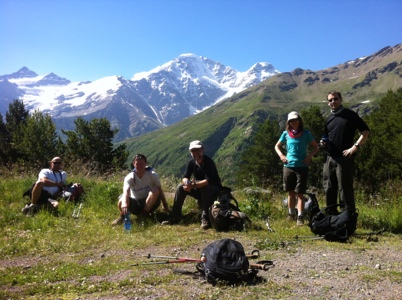
Our group (from the left): Tommy, Derry, guide Sasha, Róisín and John